
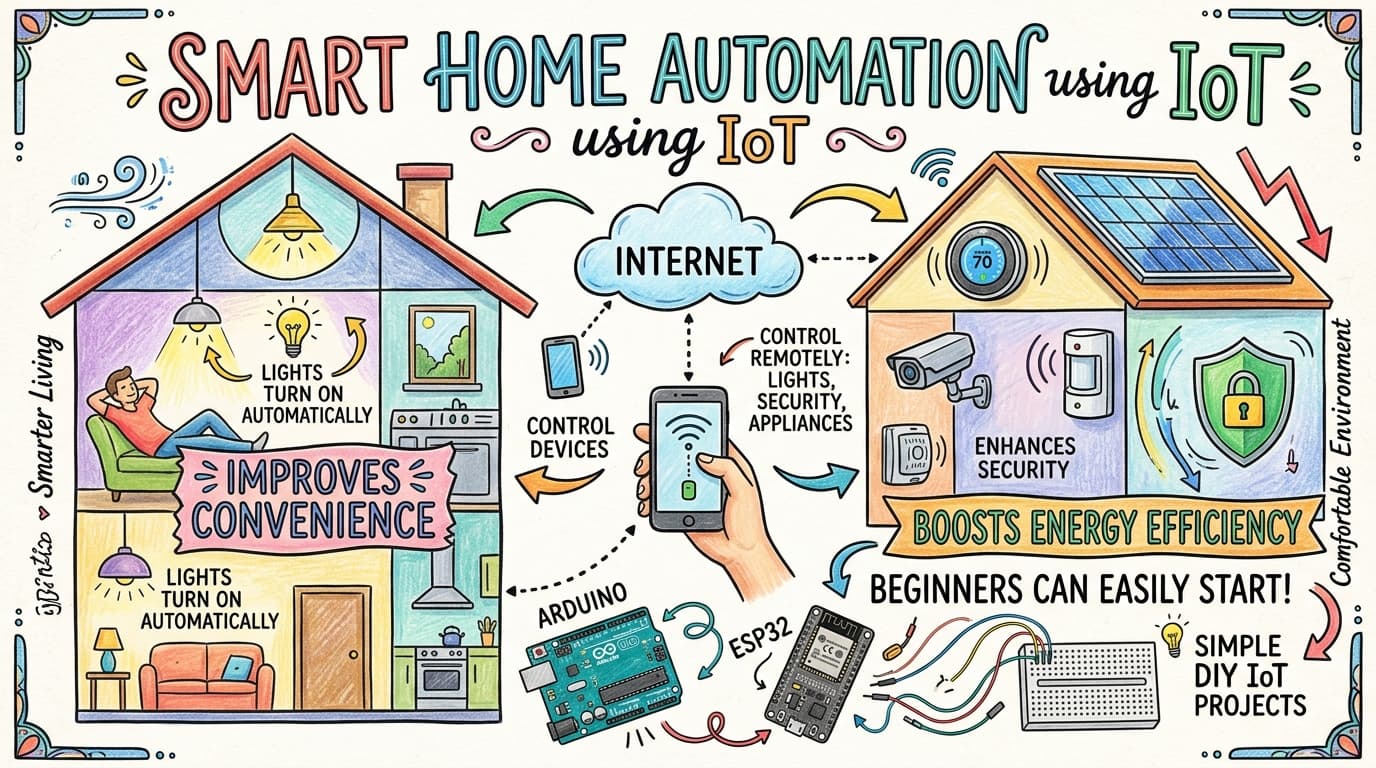
Smart Home Automation Using IoT: A Complete Beginner’s Guide
Smart Home Automation Using IoT: A Complete Beginner’s Guide
Technology is rapidly transforming how we live, and one of the most exciting innovations is Smart Home Automation using IoT (Internet of Things). Imagine controlling your lights, fans, security cameras, doors, and appliances directly from your smartphone — anytime, anywhere. That’s the power of IoT-based smart homes.
Whether you are a student, DIY electronics enthusiast, homeowner, or beginner in technology, understanding smart home automation can open doors to modern living and innovative projects.
In this beginner’s guide, we will explore what smart home automation is, how IoT works, its benefits, applications, and how you can start building your own smart home system.
What is Smart Home Automation?
Smart Home Automation refers to the use of technology to automatically control household devices and appliances. Instead of manually operating lights, fans, locks, or security systems, these devices can be managed remotely using smartphones, voice assistants, or automation rules.
A smart home can control:
Lighting systems
Air conditioners and fans
Smart TVs and appliances
Home security cameras
Smart door locks
Motion sensors
Smart alarms and sensors
The goal is to make homes smarter, safer, energy-efficient, and more convenient.
What is IoT (Internet of Things)?
The Internet of Things (IoT) is a technology that connects devices to the internet so they can collect, send, and receive data.
In a smart home:
Devices communicate through Wi-Fi or Bluetooth
Sensors detect changes in the environment
Smart controllers process information
Users control devices remotely
For example:
When you leave home, your IoT smart system can automatically:
✔ Turn off lights
✔ Lock doors
✔ Activate security cameras
✔ Adjust room temperature
All of this happens automatically or through your smartphone.
How Does IoT-Based Smart Home Automation Work?
A smart home automation system generally works through four key components:
1. Sensors
Sensors collect information from the environment.
Examples include:
Motion sensors
Temperature sensors
Gas leak sensors
Smoke detectors
Humidity sensors
These sensors send data to the system.
2. Controllers
Controllers process information and make decisions.
Popular controllers include:
Arduino
ESP8266
ESP32
Raspberry Pi
These microcontrollers act as the brain of the smart system.
3. Connectivity
Devices connect through:
Wi-Fi
Bluetooth
Zigbee
GSM
Internet cloud platforms
Connectivity allows remote access from anywhere.
4. User Interface
Users control devices using:
Smartphone apps
Voice assistants
Web dashboards
Touch panels
Popular voice assistants include:
Amazon Alexa
Google Assistant
Apple HomeKit
Benefits of Smart Home Automation Using IoT
1. Convenience
Control your home devices from anywhere using your mobile phone.
Forgot to switch off lights? Simply do it remotely.
2. Improved Security
Smart security systems provide:
CCTV monitoring
Motion alerts
Smart door locks
Emergency notifications
This improves home safety significantly.
3. Energy Efficiency
Smart automation reduces electricity waste by automatically turning devices on/off when needed.
For example:
Lights automatically switch off when no one is in the room.
4. Cost Saving
Lower electricity bills due to efficient energy management.
5. Better Lifestyle
Automation makes daily life easier and more comfortable.
Common Applications of Smart Home IoT Systems
Smart Lighting System
Automatically control lights based on schedules or motion detection.
Smart Security System
Monitor your house remotely using cameras and sensors.
Smart Temperature Control
Automatically manage room temperature and air conditioning.
Smart Door Lock
Open or lock doors using fingerprint or smartphone control.
Smart Irrigation System
Automate garden watering based on soil moisture.
Smart Appliances
Control fans, TVs, refrigerators, and kitchen devices remotely.
Components Required to Build an IoT Smart Home Project
If you want to build your own DIY smart home automation project, here are some common components:
Arduino or ESP32
Relay Module
Wi-Fi Module
Motion Sensor
Temperature Sensor
Smart Bulb or LED
Mobile App (Blynk, IoT platforms)
Power Supply
Beginners often start with a smart light control project before moving to advanced automation.
Beginner Smart Home Projects Using IoT
Here are some easy projects to start with:
1. Smart Light Control Using Smartphone
Control room lights remotely.
2. IoT-Based Temperature Monitoring System
Monitor room temperature in real-time.
3. Smart Door Security System
Receive alerts when someone enters.
4. Home Automation Using ESP32
Control multiple appliances wirelessly.
5. Voice-Controlled Smart Home
Use Google Assistant or Alexa commands.
These projects are excellent for students, makers, and electronics learners.
Challenges in Smart Home Automation
Despite many benefits, smart homes also face some challenges:
Internet dependency
Cybersecurity risks
Initial setup cost
Device compatibility issues
However, technology is improving rapidly, making smart homes more secure and affordable.
Future of Smart Homes Using IoT
The future of IoT smart homes looks exciting.
Upcoming trends include:
✔ AI-powered automation
✔ Predictive smart systems
✔ Energy optimization
✔ Smart healthcare monitoring
✔ Fully voice-controlled homes
In the coming years, homes will become even smarter and more autonomous.
Final Thoughts
Smart Home Automation using IoT is changing the way people live by making homes safer, smarter, and more energy-efficient. Whether you want to improve convenience or explore electronics innovation, IoT-based smart homes offer endless possibilities.
If you are a beginner in electronics, Arduino, IoT, or DIY technology projects, starting with simple smart home automation projects is a great way to learn.
The future of smart living has already begun — now is the perfect time to start building your own smart home!